



Beyond the Waiting Room: The Power of Medical Specialty Targeting
Healthcare advertising has traditionally focused on reaching broad patient populations, often using age, geography, and general demographic characteristics to guide media decisions. But as advertisers look for more relevant ways to communicate with consumers, the healthcare environment itself is becoming an increasingly important targeting consideration.
Not all healthcare visits are the same, and neither are the audiences visiting different types of medical facilities.
A pediatrician’s office serves a different patient population than a cardiology practice. An orthopedic clinic may attract patients with different concerns than a women’s health center, while primary care practices serve a broader range of medical needs.
For advertisers, these distinctions create opportunities to move beyond general healthcare targeting and develop campaigns that are more closely aligned with specific audiences and environments. Medical specialty targeting allows brands to consider the type of care being provided, the patients and caregivers likely to visit, and the broader context surrounding those visits.
This can be especially valuable for healthcare-related advertisers whose products and services are relevant to particular patient groups. A pediatric healthcare campaign, for example, might benefit from placements in family-oriented medical practices, while messaging about mobility, preventive care, or services for older adults may be better suited to other clinical environments.
The goal is not simply to reach consumers while they are receiving medical care. It is to understand how different healthcare settings create distinct opportunities for relevant communication. That distinction is important because healthcare advertising requires a thoughtful approach.
Medical environments are places where patients and caregivers may be focused on personal concerns, treatment decisions, or managing the health of family members. Advertising in these settings should respect that context, providing clear, appropriate information without making assumptions about an individual’s medical condition.
When planned carefully, specialty-based media can help advertisers align their messages with the general needs and interests of the audiences they hope to reach.
This approach is also influencing how out-of-home media providers organize and present healthcare inventory.
Rather than viewing medical offices as one broad advertising category, networks can increasingly be evaluated by practice type, specialty, geographic location, and available media format.
Encompass Media Group (EMG) is one example of how specialized healthcare OOH networks can support this more focused approach. As a leader in place-based advertising, EMG offers advertisers access to healthcare environments that include physician offices, specialty medical practices, pharmacies, hospitals, health kiosks, and senior-focused community locations, creating opportunities to develop campaigns around specific healthcare audiences and objectives.
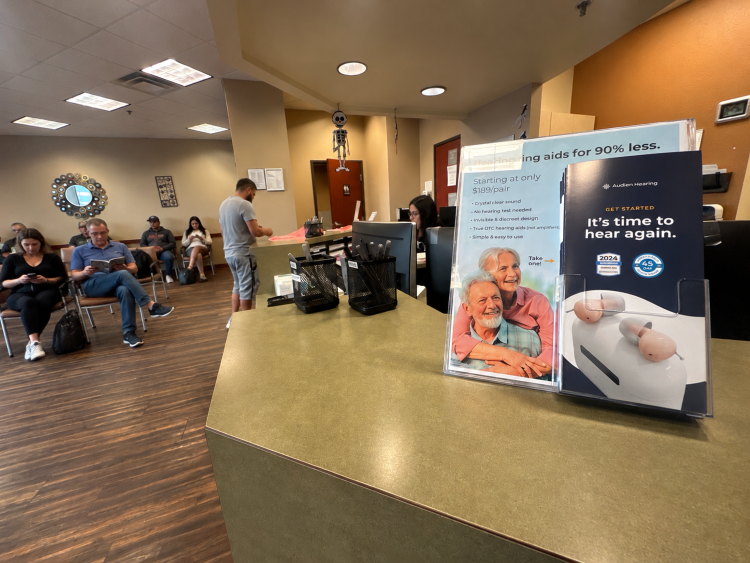
That breadth is supported by significant experience at scale. Over the past year alone, EMG programs have reached more than 100,000 physician office locations nationwide, building on a track record of hundreds of thousands of physician office advertising placements.
By combining venue selection with geographic planning, advertisers can approach healthcare OOH with a greater degree of relevance than a broad, one-size-fits-all campaign.
A healthcare organization introducing a new community service, for example, may want to prioritize facilities in neighborhoods where that service is available. A wellness brand may consider practice types that align with its intended audience, while an insurance provider could evaluate a mix of healthcare and community environments when communicating enrollment information.
Importantly, healthcare OOH is not limited to pharmaceutical companies or medical service providers.
Financial services, telecommunications, consumer products, insurance, and community organizations may also find opportunities within healthcare environments, provided the messages are appropriate for the venue and its audience.
The availability of different advertising formats adds another dimension to this strategy.
Waiting-room displays, printed posters, digital screens, literature holders, and other approved placements can serve different communication objectives. Some formats support quick brand recognition, while others allow consumers to take away information for later consideration.
Choosing the appropriate format matters as much as choosing the correct specialty.
A message intended to build general awareness may require a different approach from one designed to explain a service or encourage consumers to seek additional information.
As targeting strategies continue to evolve, healthcare OOH offers an important reminder that audience relevance is not determined by demographics alone. The places people visit, the services available within those locations, and the context of the environment can all help advertisers make more informed media decisions.
For brands looking to communicate in a more targeted and meaningful way, understanding the differences between healthcare specialties may be one of the most valuable opportunities within place-based advertising.


- Advertisement -


