


The History of the First Billboards in America and the Origin of the terms ‘BILLBOARD’, ‘Outdoor Advertising’, ‘Showing’ and ‘Outdoor Salesman


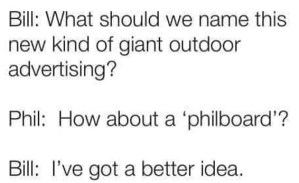
The origin of the terms ‘Billboard’, ‘Outdoor Advertising’, ‘Showing’, and ‘Outdoor Salesman’.
The History of the First Billboards in America
republished for prosperity or something like that.

by William Board, OOH Today
Virginia, USA, April 1, 2025
The first quarter has come to an end, and as April 1 kicks off the start of Q2, spring is in the air.
It marks the beginning of a new season, a time to start anew with fresh thinking. Taking an appropriate pause to review our history, measure our progress, and gain perspective on our OOH life.
It’s the time of year when OOH Today shares our Industry’s proud historical narrative of how the first modern-day billboards came to be, including the origin of the terms’ billboard, ‘outdoor advertising, ‘showing,’ and ‘outdoor salesman.’
Many of you, veterans of the Outdoor Advertising business, are familiar with the history of the first billboard.
For those who do not, here’s the long and short account of the simplest of beginnings in birthing what we know as modern-day Out of Home (OOH).
It innocently started with a young man named William Boarders during a tough economy. William was a walking sign carrier. A sandwich sign board wearer. How did that come to be? William, or Bill, worked with his Father and brothers in the family-owned haberdashery business.

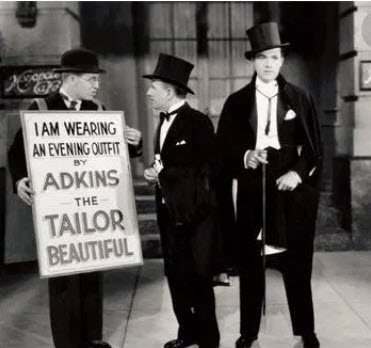
The Great Depression created a hardship on his family’s custom-made clothing enterprise. Bill, being the youngest, was forced to abandon the warm confines of working inside the store (or indoor) and go ‘outdoor’ to work the streets, carrying a sign at his father’s insistence. Bill worked on the street, or ‘outdoor,’ hawking his family’s business with flyers and shouting slogans, all the while wearing a custom-made sandwich board sign. The first sign was a relatively crude build, hand-lettered by his mother and constructed by his father, who used leather suspenders from the store’s inventory to hold the signs in place over his small shoulders.

While other haberdasheries and businesses failed, Boarders’ men’s clothing business flourished, with many attributing the success to Bill’s continued efforts in outdoor advertising through the tough economy, which contributed to the recovery. The Father’s ‘sign idea’ via his son proved that OOH advertising, when continued in tough times, provided more tremendous success than those businesses that did not advertise.
Local merchants witnessed the success of the family haberdashery, thanks to young Bill Boarders’ sandwich signs. The messages were inescapable as they saw the walking signs, moving along strategically planned routes, often in front of their shops or near lunch counters during the noon hour. It was not long before they asked young Bill for the opportunity to promote their business on his boards. Soon, Bill was leasing his “sign space” for their messages and began adding his first employees to carry the signs.

The name, Bill’s Boards, became a generally accepted reference by the local business community who would direct their secretary to, ‘place an ad on one of Bill’s Boards’. As the years went on, William Boarder’s sign business evolved into the shortened version that we today call billboards.
As billboard demand from merchants grew, so did Bill’s business. At one point, he had a team of 100 men carrying his billboards throughout the city, targeting specific stores and neighborhoods. The term ‘showing’ evolved from the number of men to be hired or appear on the street, showing the advertising. Targeting and budgetary considerations determined whether Advertisers would place an order for half or 50% of the workforce, thereby requesting a 50% showing of billboards. Or 25% for a 25 showing.
And as for William Boarders’ employees? The walking, hawking, sandwich billboard salesmen?
They became known, just like Bill, as ‘Outdoor Salesman.’
The Father’s ‘sign idea’ via his son, proved OOH advertising, when continued
in tough times, provided more tremendous success over those businesses who did not advertise.
Eventually, Bill Boarders became very wealthy from his billboard business and started buying and leasing land. On that land, Bill built his first stationary billboard, and the rest is billboard history.

Note: This is the 11th year of this post, and it is pure parody. It is in no way whatsoever based on fact. Happy April Fools’ Day!


- Advertisement -


[…] post The History of the First Billboards in America and the Origin of the terms ‘BILLBOARD’, ‘Outdo… first appeared on OOH […]