


From Billboards to Impact: John Gibb and Formetco Are Giving Back
Making a Broader Impact with 'Space'

From Billboards to Impact:
How John Gibb and Formetco Are Giving Back in a New Way
 by Brent Baer, Publisher OOH Today
For those who have spent any meaningful time in the out-of-home industry, there are few names as recognizable—or as respected—as John Gibb. I have had the good fortune of working with John since my early days of running the Kalamazoo and Peoria OOH markets for Adams beginning in 1982. John was always the go to guy for anything Formetco. He managed a strong sales team, this was Formetco pre-digital signage days, and Formetco was THE name in OOH hardware.
Since joining Formetco LLC in 1968, John has been a constant presence in the billboard business, building relationships that have spanned decades and helping shape both the company and the broader independent operator community. For many across the industry, his name is synonymous with Formetco itself.
But in recent years, his focus has shifted.
Not away from the industry—but toward something that sits alongside it.
A Different Kind of Return
Several years ago, as John transitioned out of the day-to-day business, he began asking a different question: how could Formetco use what it already had to make a broader impact?
The answer wasn’t a new product or service.
It was a space.
It was a space.
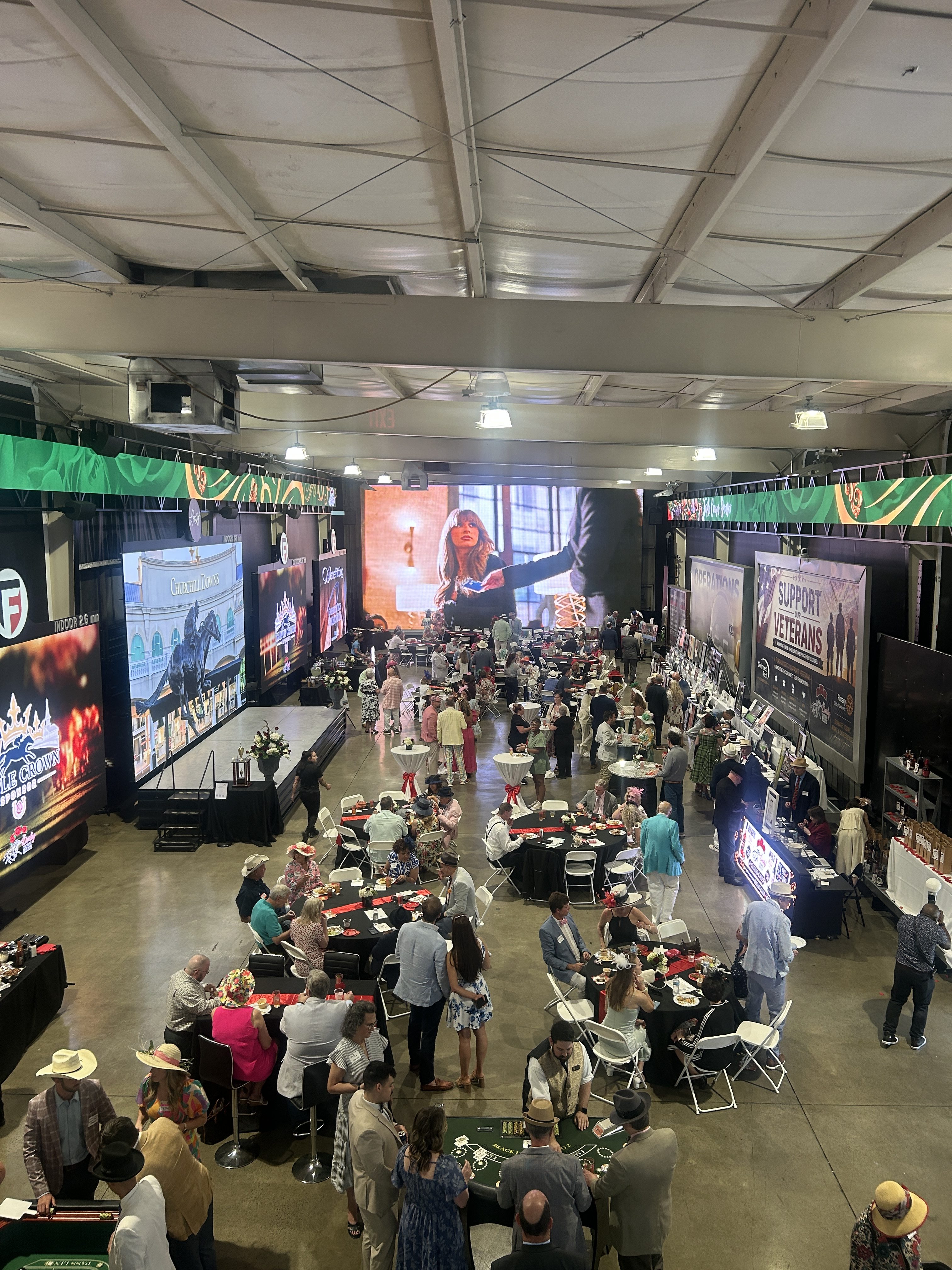
Formetco’s LHG Innovation Center in Duluth, Georgia was originally built as a high-end showroom—a space designed to showcase digital displays, scoreboards, and technology in a way few facilities across the country can. It was built to give customers a true experience of Formetco’s capabilities.
What it became was something else entirely.
Today, that same space has helped generate more than $1 million for local charities through nonprofit fundraising events.
$1 million for local charities
Turning a Showroom Into a Platform
The concept was simple, but the execution required commitment.
Instead of limiting the Innovation Center to customer demonstrations, Formetco began opening its doors to nonprofit organizations—hosting events, fundraisers, and community gatherings inside a space typically reserved for business.
Over time, those events began to scale.
Organizations like Rainbow Village, Young Life, Make-A-Wish Foundation, the Leukemia & Lymphoma Society, and the Rotary Club of Gwinnett County all utilized the space to host fundraising events. Local high school booster programs followed.
The milestone came this past weekend during the Rotary Club of Gwinnett County’s Derby Down South event, when the cumulative impact surpassed the $1 million mark.
A Company-Wide Effort
While John may have been the catalyst, the effort has been anything but individual.
Hosting events at this scale requires involvement from nearly every part of the organization—operations, sales, marketing, accounting, IT, and facility teams. The same people who design, build, and support Formetco’s products are the ones helping bring these events to life.
In many ways, that’s what makes the story resonate.
This isn’t a separate foundation or standalone initiative. It’s an extension of the business itself.
A Reflection of the Industry
For those in the out-of-home industry, this story reflects something familiar.
This has always been a relationship-driven business—built on trust, long-term partnerships, and community connections.
What Formetco has done with the Innovation Center is a different expression of that same principle.
Instead of leveraging those relationships solely for business growth, they’ve extended them into community impact.
The Next Chapter
Formetco, founded in 1968 as a small billboard supplier, has grown into the nation’s largest full-service supplier of hardware and digital display solutions to the billboard industry, while also becoming a leading provider of video scoreboards for schools and universities.
But this chapter of the story isn’t about scale.
It’s about purpose.
For John Gibb, it represents a continuation of a career built on relationships—just applied in a new way.
And for Formetco, it serves as a reminder that some of the most meaningful innovations don’t come from new products, but from rethinking how existing resources can be used.
In an industry built on visibility, this may be one of the most impactful things happening just behind the scenes.


- Advertisement -

