



Automating OOH Beyond Programmatic
pDOOH accounts for only about 10 percent of OOH ad spend in the US


pDOOH accounts for only about 10 percent of OOH ad spend in the US
Automating OOH beyond programmatic

By Maarten Dollevoet, Chief Revenue Officer Broadsign
From smart homes to driverless vehicles, AI assistants, and beyond, the era of automation is upon us. In seconds, I can book a rideshare home, order dinner for delivery upon my arrival, and schedule my alarm to disarm from my phone. Yet, booking and securing out-of-home (OOH) ad inventory can take days or even weeks. Automation is the industry’s elephant in the room, but with artificial intelligence (AI) ready to reimagine the digital advertising landscape, that must change.
For OOH to enter a new phase of growth and maturation, an automation strategy beyond the current programmatic and content scheduling offerings is needed urgently. It’s essential for enhancing operational and transactional efficiency, reducing costs, and attracting and retaining talent on both the buy- and sell-side.
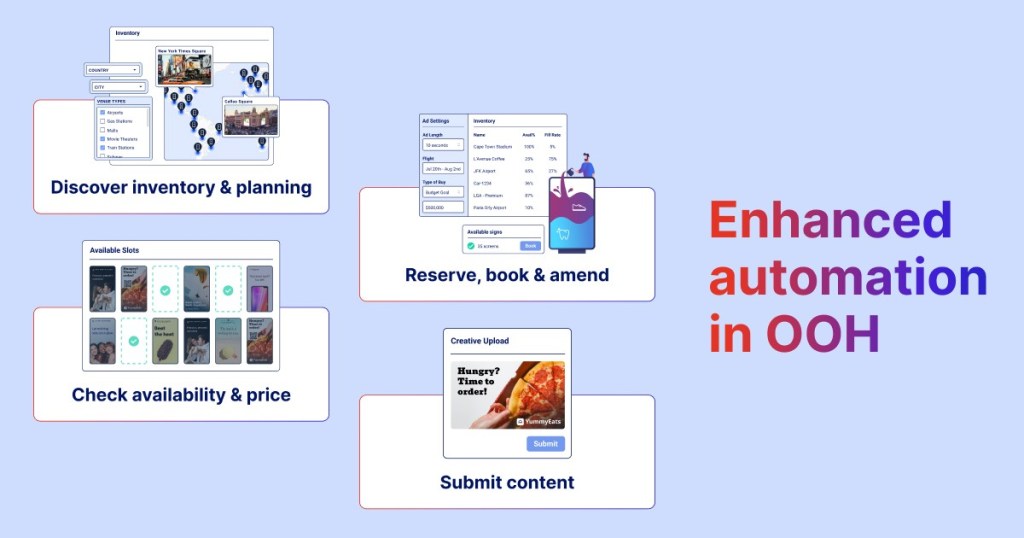
Breaking down OOH’s automation dilemma
Programmatic digital OOH (pDOOH) and automation often get conflated. While pDOOH is a form of automation, most OOH inventory isn’t programmatic or onboarded to programmatic platforms, particularly static ones. pDOOH accounts for only about 10 percent of OOH ad spend in the US. This means that a significant majority of OOH transactions in the region are still facilitated by picking up a phone and managing inventory availability and sales through spreadsheets.
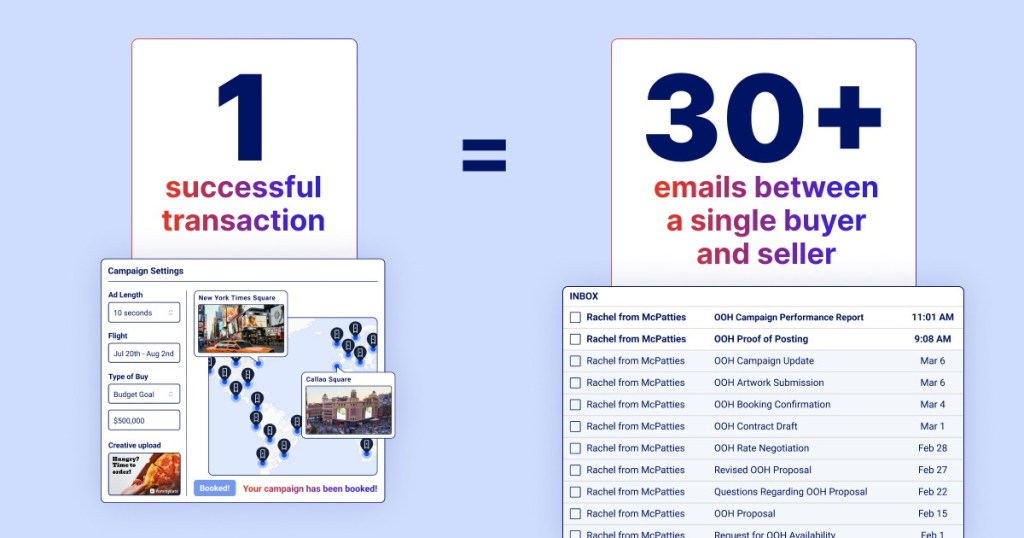
While OOH content management systems (CMS) have helped to automate content delivery and transaction processes to a certain extent, anecdotal evidence suggests that one successful transaction can still involve 30 or more back-and-forth emails between a single buyer and seller. If you only win 30 percent of your RFPs, that results in hundreds of emails to secure a single campaign. Just let that sink in for a moment.
anecdotal evidence suggests that one successful transaction can still involve 30 or more back-and-forth emails between a single buyer and seller.
If you only win 30 percent of your RFPs, that results in hundreds of emails to secure a single campaign
In a world where you can log on to TikTok, Meta, or some other social platform and spend millions in minutes without all the back–and–forth, OOH loses out in the omnichannel campaign planning process. While specialist agencies may be used to age-old practices, the digital agencies that we are all actively pursuing may quickly grow disenchanted with the work OOH currently requires compared to other channels that already have automation dialed in.
Furthermore, attracting talent to handle OOH transactions will become more difficult for both media owners and buyers. As feedback from several agencies recently indicated, up-and-coming media professionals may quickly grow frustrated by the lack of automation and quit. Those businesses must then retrain a new hire, who may do the same thing, creating a vicious cycle.
The bottom line is that media owners spend nearly 80 percent of their time on OOH planning and execution, leaving only 20 percent for sales. That’s a lot of revenue potential wasted. A $500K campaign requires the same level of effort for media owner sales teams as a $50K campaign. To ensure return buyers, these teams should be able to devote more time and energy to serving complex campaigns.
The bottom line is that media owners spend nearly 80 percent of their time on OOH planning and execution, leaving only 20 percent for sales.
That’s a lot of revenue potential wasted. A $500K campaign requires the same level of effort for media owner sales teams as a $50K campaign
Media buyers also lose a lot of time to manual OOH transaction processes that could be better spent serving client and campaign needs. While these challenges are easy to identify, the course ahead isn’t straightforward. What is certain is that the industry can no longer ignore the automation conversation. So, what potential roadblocks lie ahead, and how do we move forward?
Laying out the challenges to automating OOH
Building one central platform with ample global static and digital inventory
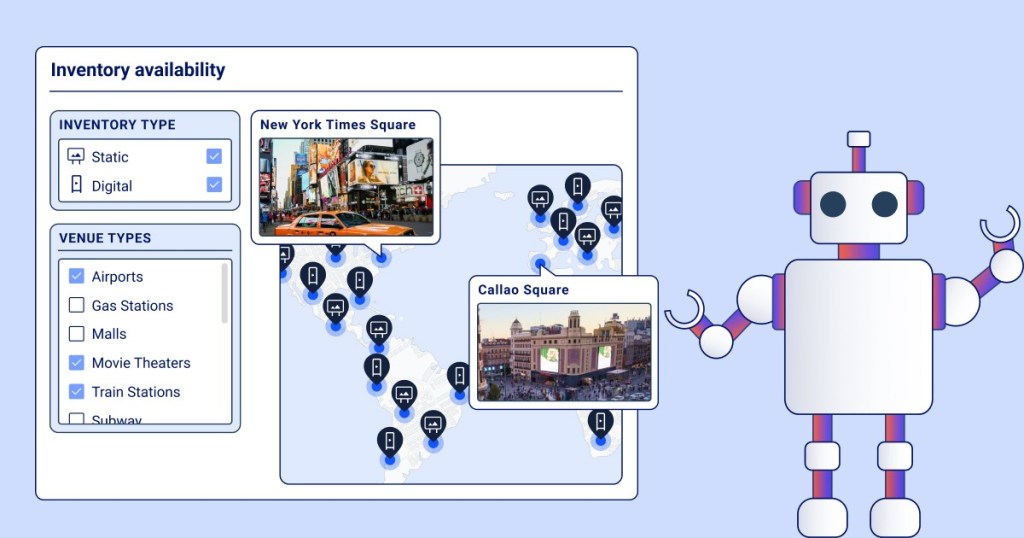
One of OOH’s many allures is the breadth of inventory it offers, from static and digital posters and billboards to furniture, wayfinding kiosks, and more, which span urban, transit, retail, roadside, venue, healthcare, and many other environments with high dwell times. For any automation attempt to succeed, it will require one central platform where most of this inventory can be accessed by buyers across the globe, which is no easy feat.
Securing cross-industry buy-in
The first step in realizing this platform is to gather input and approval from several players across the industry to avoid a chicken-and-egg scenario. Media buyers need to communicate their need for an OOH automation platform and offer insights as to the models that make the most sense while media owners need to come to the table ready to listen to buyers and help formulate strategies to streamline their processes. OOH ad tech developers must contribute the tools and knowledge set to transform this vision from inputs to reality.
Standardizing a future vision
There are different ways to approach the development of this platform. Regardless, it must support real-time availability and pricing, as well as a logical discovery and booking process. Perhaps buyers or agencies enter their campaign objectives, and the platform then queries the availability of static and digital assets that can best help them achieve those objectives. They can then opt to book it guaranteed in advance. It’s not a totally new concept, as programmatic guaranteed has been a practice in digital advertising for years. The challenge lies in standardizing how this will be accomplished.
Brands and agencies will spend money where it’s easy to spend, which presents a problem for OOH in its current state
Failure to automate isn’t an option
While the industry faces challenges in its automation journey, it can no longer ignore them. Competition for ad dollars has never been fiercer. The advertising landscape continues to fragment, from the emergence of CTV and retail media to the growth of TikTok, Meta, and other social platforms. Brands and agencies will spend money where it’s easy to spend, which presents a problem for OOH in its current state compared to other digital channels.
Yes, they could theoretically double down on programmatic digital out-of-home advertising, but the efficacy of that approach is debatable, given that programmatic doesn’t support all the different ways buyers want to purchase OOH. If non-programmatic inventory isn’t bought because it’s more difficult and time-consuming to purchase than digital channels like CTV, search, and social, it will be tough for OOH overall to achieve sustained growth in the coming years.
This transformation won’t be instantaneous, but the doorway to change is certainly open if all parties are willing to come to the table
The time for action is now
As a media owner, if you haven’t already, now is the time to gather your executive leadership team to iron out what your automation strategy should look like in the coming years beyond programmatic. Ask the right questions. How do you want it to take shape, and what tools and personnel do you need to implement it? What input from buyers and brands do you need to ensure you’re on the right track?
Remember, you don’t have to do it alone. Start with a simple and open discussion with your OOH ad tech providers, who can help guide you. Then, have candid conversations with your more traditional buyers. These conversations can provide powerful insights.
The future of OOH automation, however, doesn’t just hinge on media owners. Media buyers must also be vocal about their need for automation and what the transaction models might look like on a standardized platform that would help them the most.
This transformation won’t be instantaneous, but the doorway to change is certainly open if all parties are willing to come to the table for dialogue. That opportunity, however, will only narrow as the world becomes more automated, making the present the opportune moment for our industry to get started.
The views and opinions expressed in OOH Today are solely those of the contributor and do not necessarily reflect the official position of OOH Today or imply endorsement. Our editors determine that content published by OOH Today is 100% in the interest of our readers, independent of advertising, sponsorships, or other considerations.


- Advertisement -

