




OOH …Here’s One Thing
by Jim Johnsen,
Managing Director, Johnsen, Fretty & Company
(jump to 2:25 if you are pressed for time)
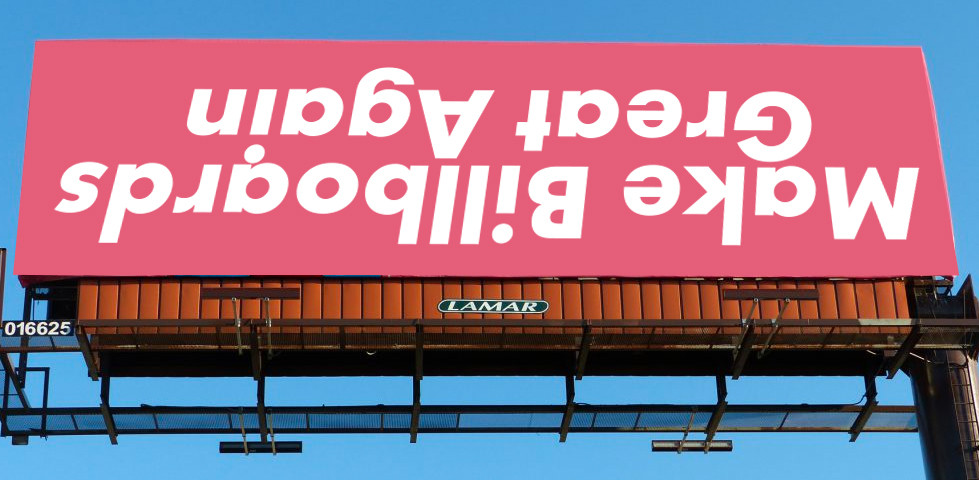
Johnsen, funny, but where are you going with this? Well, it was either contemplate my navel or reflect on the recent IBO conference and why oligopolies exist, as I snaked (actually snailed) through the security process. Huh? Well with plenty of time I got to thinking. Why does Lamar, Outfront and Clear Channel control 65% (maybe more) of the action in the Outdoor business? I mean you have a group of independent, well meaning, industrious, smart, entrepreneurial people in the Independent Billboard Operators (IBO) association, and yet from a global macro perspective, they are overshadowed by the Big 3.
How did this happen…and will it get worse or better?
A few examples, per ChatGPT
Cars:
10 Global car manufacturers control 90% of the world’s production. Volkswagen, Toyota, Stellantis (Fiat/Chrysler etc.), General Motors, Ford, Hyundai, Honda, BMW, Mercedes Benz, Renault.
The airline industry is one of the most consolidated major industries in the world, especially in regions like the United States, Europe, and increasingly Asia. Think American Airlines, Delta, United, Southwest.
Packaged goods:
The packaged goods industry is controlled by fewer than a dozen multinational corporations that dominate global production, marketing, and distribution —with retail giants and logistics platforms shaping consumer access and pricing. Procter & Gamble (P&G), Unilever, Nestle, PepsiCo, Coca-Cola Company, Mondelez International, Mars, Incorporated, Johnson & Johnson, Colgate-Palmolive and Kimberly-Clark.

Energy (Oil, Gas, and Utilities):
Oil refining: The top 5 refiners (ExxonMobil, Chevron, Marathon, Valero, Phillips 66) control ~75% of U.S. capacity.
Utilities: Local monopolies by design — electricity and gas distribution are regulated but fully consolidated regionally.
Renewables: A few large developers (NextEra, Invenergy, Iberdrola/Avangrid) dominate capacity additions.
Summary: Energy is structurally consolidated — sometimes by regulation, sometimes by economics.
Beef processing: The “Big Four” — Tyson Foods, JBS, Cargill, and National Beef — control ~85% of U.S. beef.
Pork: Top 4 firms control ~70%.
Poultry: Top 4 control ~60%.
Seeds & Agrochemicals: Bayer (Monsanto), Corteva, Syngenta, BASF dominate.
Summary: Agriculture and food processing are among the most vertically integrated and concentrated supply chains in America.
Pharmaceuticals & Healthcare
Drug distribution: The “Big Three” — McKesson, AmerisourceBergen (now Cencora), and Cardinal Health — control ~90% of the U.S. drug wholesale market.
Pharmacy retail: CVS, Walgreens, Walmart, and Cigna/Express Scripts dominate national pharmacy dispensing.
Health insurance: UnitedHealth, Elevance (Anthem), CVS/Aetna, and Cigna control ~60% of the market.
Hospitals: Many local hospital markets are near monopolies after decades of mergers.
Summary: U.S. healthcare — from drugs to insurance — is one of the most concentrated ecosystems in the world.
Top 4 banks (JPMorgan Chase, Bank of America, Citigroup, Wells Fargo) control ~40–45% of all U.S. deposits and an even higher share of credit card and investment banking markets.
Investment management is dominated by BlackRock, Vanguard, and State Street, which together manage over $20 trillion — roughly 80% of all U.S. index fund assets.
Summary: One of the most consolidated sectors in America — both in banking and asset management.
“Who’s to say”


Help us Help You by keeping the only Independent Voice for OOH.
Keep unconstrained speech for the OOH/Billboard Industry,
Click here to ⇒ Subscribe.

- Advertisement -

