


The ‘Measurement Commissioner’ —How a Baseball “Commissioner” Mindset Could Clean Up Geopath and Restore Trust in Out-of-home Measurement
Three immediate causes of buyer pushback and fractured confidence


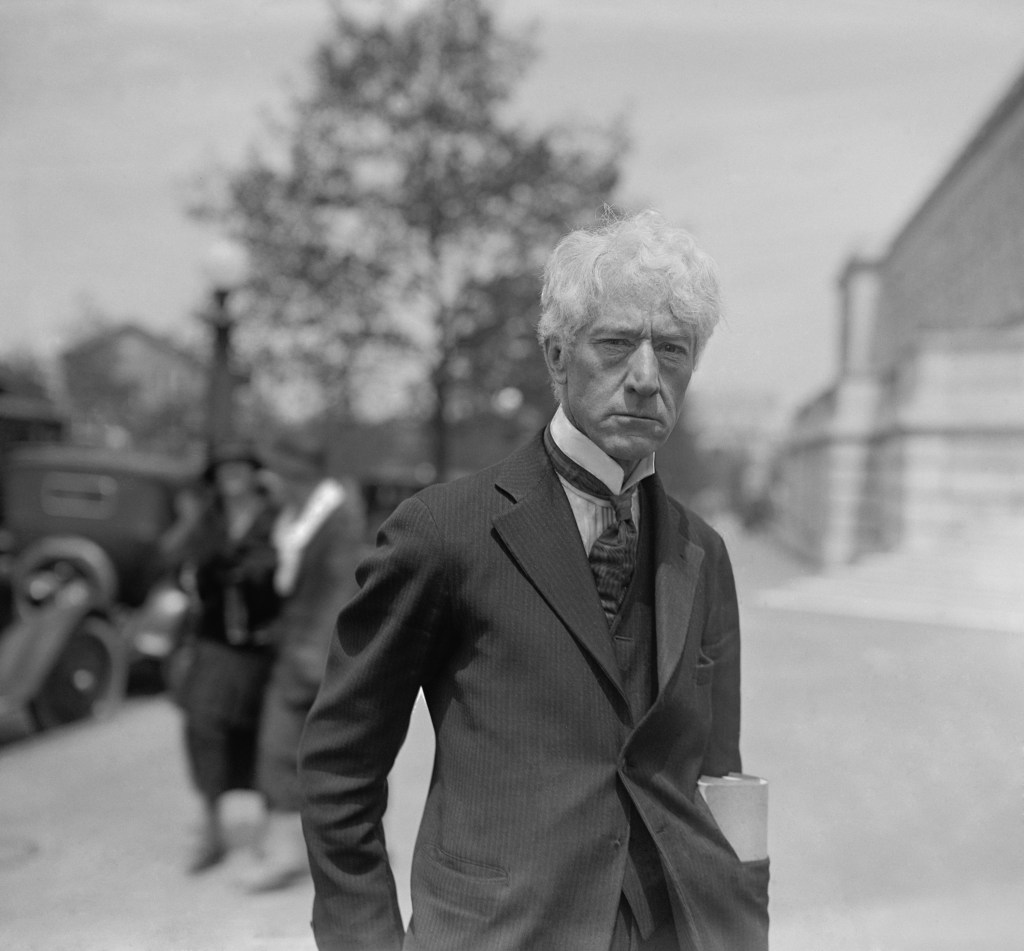
Kenesaw Mountain Landis for OOH: How a Baseball “Commissioner” Mindset Could Clean Up Geopath and Restore Trust in Out-of-Home Measurement
Part One
 By Brent Baer, Publisher, OOH Today. For this post, we consulted Allie Iverson for assistance
Imagine baseball in 1920: trust shattered after the devastating Black Sox scandal, fans furious, and the sport’s leaders desperate. The owners hired a no-nonsense judge — Kenesaw Mountain Landis — and gave him sweeping authority to fix the game. He strode in, made fast, public, and uncompromising rulings, and for better or worse changed how baseball was governed.
Now translate that to today’s out-of-home (OOH) advertising ecosystem: Geopath is the industry’s ratings body — the referee and scoreboard for impressions, reach, and audience measurement. But in recent years, Geopath’s methodology, cadence, and governance have drawn sharp criticism from big media owners, independents, and some buyers—the result: fractured trust.
In two parts, this story and tomorrow’s final Part Two, lay out (1) what’s gone wrong, (2) how the measurement landscape changed, (3) who pushed and who pushed back, and (4) a Landis-style reform plan — an actionable blueprint for restoring credibility to OOH measurement.
What’s the problem, in plain English?
Geopath’s mission is straightforward: provide a single, independent “currency” to tell buyers how many people could see an OOH ad and who they are. But three complaint themes keep recurring across industry coverage and public statements:
- Staleness and inaccuracy. Some large owners and industry voices say the data Geopath uses (or the way it’s ingested/processed) can be “stale, old, and in some cases inaccurate.” That blunt assessment came from Lamar’s CEO, Sean Reilly, who told investors Geopath “does a bad job…they’re buying their data from vendors that are not the greatest in the world and the data is stale, and old in some cases, inaccurate.” Investing.com
- Methodology opacity and comparability. Geopath moved from traffic counts and static averages to models powered by massive mobile-location datasets, viewsheds, and demographic matching — which are fundamentally different inputs. That shift makes “apples to apples” comparisons with older figures difficult, and it has unsettled buyers and some owners. Geopath itself has warned that the new inputs mean old comparisons aren’t direct matches. geopath.org+1
- Multiple measurement systems and fragmentation. Large owners and tech vendors have built their own planning/measurement stacks (Clear Channel’s RADAR family; OUTFRONT’s smartSCOUT; StreetMetrics for moving inventory). That has given buyers alternatives — but also created two problems: (a) operators sometimes present different numbers, and (b) buyers and agencies grow skeptical and pick the dataset that best suits them. See Clear Channel’s RADAR materials and OUTFRONT’s partnerships for examples of operator-driven measurement. Clear Channel Outdoor+1
Those three facts are the immediate causes of buyer pushback and fractured confidence.
OOH measurement isn’t what it used to be. Two significant shifts drove the transition — and unintentionally opened the door to confusion.
How measurement changed — why these issues exist now
OOH measurement isn’t what it used to be. Two significant shifts drove the transition — and unintentionally opened the door to confusion.
- From static counts to people-movement modelling.
Geopath’s modern approach uses aggregated mobile location data, traffic counts, viewshed modeling, and demographic overlays to estimate impressions and audience composition. That yields far more granular capabilities (time-of-day, audience segments, near-real-time adjustments) than the old, annually updated “average weekly impressions” model — but it also requires new inputs, new vendor relationships, and new validation routines. Geopath has argued these new inputs (hundreds of millions of anonymized device traces) give better fidelity — but they also change baseline numbers and expectations.geopath.org+1 - Proprietary alternatives and programmatic buying.
Large landlords and programmatic platforms have built proprietary DMPs and measurement tools (OUTFRONT’s smartSCOUT, Clear Channel’s RADAR suite, StreetMetrics for moving assets). These systems can be tuned to the operator’s own inventory and meet modern buyer demands (attribution, footfall, campaign proof)—and buyers sometimes prefer them to Geopath when they want immediacy or different attribution models. The net effect: multiple, sometimes conflicting answers to “how many people saw this ad?”OUTFRONT+1
Who’s said what — voices that matter
- Sean Reilly (Lamar CEO): “Geopath…does a bad job…they’re buying their data from vendors that are not the greatest in the world and the data is stale, and old in some cases, inaccurate.” (March 2025 investor remarks). That quote crystallized a wave of public criticism by a major owner and investor community. Investing.com
- Geopath leadership (past and present): Geopath has responded publicly and through thought leadership, explaining the move to mobile-data measurements and advocating that the industry should move from “location” to “movement.” Geopath documents and leaders (e.g., Kym Frank in earlier coverage and subsequent Geopath posts) emphasize the benefits of near-real-time mobility inputs and more robust, audience-first metrics.
- Large operators (Clear Channel, OUTFRONT): These companies market their own RADAR/smartSCOUT/attribution tools while continuing to reference Geopath as the industry currency. In practice, they use a blended approach: planning with Geopath where required, augmenting with proprietary data for campaign performance and attribution. That hybrid approach further shows why buyers sometimes ‘shop’ data. Clear Channel Outdoor+1
Why agencies and buyers are reluctant to believe a single measurement
Buyers want certainty, comparability, and attribution. When the industry’s single currency (Geopath) shifts inputs, or when big owners deliver alternate numbers, buyers react in two ways:
- Skepticism — If the numbers change dramatically, buyers wonder whether they can trust year-over-year planning or long-term attribution. Industry commentary has repeatedly highlighted buyer unease, including decisions to hold payments or insist on third-party proof.
- Workarounds — Agencies increasingly ask for additional proof (campaign-level attribution, footfall lifts, direct DMP overlays) or simply layer operator/campaign measurement on top of Geopath. That layering reduces Geopath’s usefulness as a single source of truth.
A Landis-style playbook to “clean up” Geopath — practical reforms
If we take the Landis model — a visible, authoritative commissioner with broad powers to restore trust — what would that look like for OOH measurement? Below is a practical, industry-credible reform agenda combining governance, technical fixes, and transparency.
1) Create an independent, empowered Measurement Commissioner (or Oversight Board)
- Authority: The Commissioner would have the power to commission audits, demand vendor change, declare data unfit for currency, and publish binding remediation timelines. Think of a short, public list of escalatory powers (audit → corrective action → temporary suspension → replacement).
- Governance: The Commissioner reports to a tri-partite board (buying agencies, advertisers, media owners) but is selected via a transparent protocol (independent search, term limits, conflict disclosures). This avoids capture by any single large owner.
- Why it helps: A visible arbiter reduces the perception that Geopath is “owned” by large players or vendors and creates a mechanism for decisive action when credibility dips.
2) Mandatory, periodic third-party audits of methodology and data pipelines
- Scope: Audits must cover data lineage (who supplied mobile/location feeds), sample representativeness, deduplication, viewshed algorithms, and model validation vs. ground truth (manual counts, camera audits, footfall sensors).
- Publication: Executive summaries and remedial action plans should be publicly available so buyers can see progress.
- Why it helps: Independent technical audits identify weak links and force vendors to adopt best practices.
3) Enforce vendor diversity and “source transparency” for foundational inputs
- No single-vendor dependence: Geopath should avoid exclusive long-term deals that leave the currency captive to one data supplier. Instead, require multiple certified suppliers and periodic rotation.
- Data provenance disclosure: At least the categories of data sources (telco co-ops, app partners, connected cars) and freshness cadence should be published, without revealing proprietary contracts.
- Why it helps: This reduces the risk of stale or biased inputs and answers claims like those made by Lamar’s CEO about data vendors. (Sean Reilly’s comments underscore why buyers care). Investing.com
4) Publish a clear “translation guide” when methodology changes
- What to publish: When Geopath upgrades (new inputs, new models), publish an “apples-to-apples” reconciliation: what changed, why numbers differ, how to interpret old vs. new figures, and sample client scenarios.
- Why it helps: Buyers and agencies hate surprises. A reconciliation reduces confusion and prevents wild swings from being misinterpreted as incompetence or manipulation. Geopath has already stressed that new inputs change comparisons; formalizing that explanation would help buy-side adoption. geopath.org
5) Standardize near-real-time reporting cadence and provenance for planning vs. campaign measurement
- Two lanes: (A) Planning dataset — validated, less volatile, used for rate cards and long-lead buys (updated on a known cadence). (B) Campaign performance dataset — near-real-time, used for attribution and optimization, with clear flags about probabilistic limits.
- Why it helps: Buyers understand and accept different data for planning vs. proof if the roles and limitations are explicit.
6) Formal appeals and dispute resolution process for owners and buyers
- What: A bounded, transparent process where owners/buyers can trigger a review of an audit result, with a short, strict timeline and an independent adjudicator.
- Why it helps: If a vendor or owner thinks an audit mis-assigned impressions (e.g., a busy kiosk showing anomalously low counts), they can seek redress without going to press.
7) Joint industry investment in ground-truth pilots and attribution proof points
- Pilots: Multi-operator, multi-agency pilots that pair Geopath outputs with footfall sensors, camera analytics, and closed-loop attribution (e.g., visit lift tied to a campaign). Public results and methodologies should be published.
- Why it helps: Hard attribution examples are what convert skeptical buyers; operator PR and Geopath’s own outreach have emphasized the move to audience-first metrics — these pilots make that claim demonstrable. blog.geopath.org+1
How the big players fit into the plan (Clear Channel, Lamar, OUTFRONT)
- Lamar: As a vocal critic, Lamar’s public push matters — it forces urgency. The Commissioner model would give Lamar (and any operator) a formal pathway to surface concerns, request independent audits, and achieve faster remediation, rather than escalating to public criticism. The goal is not to silence critics, but to provide them with a credible path to fix data problems. Investing.com
- Clear Channel & OUTFRONT: Both have invested in proprietary planning and attribution tools (RADAR, smartSCOUT, StreetMetrics). Those investments are valuable — but the Commissioner model would require those operating systems to be transparent about how and why their numbers differ from currency audits and to participate in industry reconciliation pilots. That keeps operator innovation while preserving a single, trusted currency for cross-operator buying. Clear Channel Outdoor+1
A final, practical checklist for day one (what to do first)
- Appoint a Measurement Commissioner with a 12-month mandate and clear powers.
- Commission an independent audit of the current planning dataset, with a public executive summary within 90 days.
- Publish a vendor-diversity plan for Geopath’s foundational data (multiple certified suppliers).
- Run three joint ground-truth pilots (roadside, transit, place-based) with operator, buyer, and agency participation; publish results within 180 days.
- Roll out a two-lane data descriptor (planning vs. campaign performance) and a reconciliation guide whenever an update is introduced.
—It means clear authority, independent audit, transparent methods, and enforceable remediation.
Landis wasn’t perfect — but his lesson endures.
Kenesaw Mountain Landis was controversial: decisive and disciplinary, and not everyone liked his methods. But baseball’s leaders gave him authority because restoring public trust required an impartial figure who could act quickly and visibly.
OOH faces a similar crisis of confidence: not because companies want to deceive, but because methodologies, vendors, and incentives have changed rapidly and without a single transparent adjudication mechanism. A Landis-style approach here doesn’t mean heavy-handed punishment — it means apparent authority, independent audit, transparent methods, and enforceable remediation. That’s how you get buyers, agencies, and operators back to a place where they argue about creative and reach, not about whether the scoreboard can be trusted.
How do you get buyers, agencies, and operators back to a place where they argue about creative and reach, not about whether the scoreboard can be trusted
Tomorrow, OOH Today will publish the second part of this story, which will include our insights for:
1. A Mission Statement
2. The Charter
3. Key Powers and Responsibilities
4. Selection Criteria
5. Term and Remuneration
6. Reporting and Accountability
7. Transition and Implementation
8. Legacy & Remit
9. Suggested Candidate Shortlist
Sources & selected quotes
- Sean Reilly, CEO, Lamar Advertising — investor conference transcript (criticizing Geopath data as “stale, and old in some cases, inaccurate”). Investing.com
- Geopath: Standards & Best Practices documents and methodology descriptions (on changes from location to movement, use of large aggregated mobile datasets, and guidance about not comparing new numbers directly to old ones). geopath.org+1
- Geopath leadership commentary on moving toward near-real-time impressions and the rationale for mobile-data inputs (Kym Frank and follow-on Geopath posts).
- Clear Channel materials describing RADAR / RADARView / RADARProof as operator planning and measurement tools used alongside Geopath. Clear Channel Outdoor
- OUTFRONT press on partnering with StreetMetrics and on smartSCOUT as a proprietary measurement/data platform. investor.outfront.com

- For the Love of OOH: Please Subscribe!

- Advertisement -

