


Has England Fallen? Communism out of the closet? Something’s Wrong…
And Then? OOH God Save the King!

Has England Fallen? Communism out of the closet? When a VPN Ad Gets Banned, You Know Something’s Wrong…
As I thought about this and heard Bat Shit Bonkers Britain talking about Muslims for censorship too, it really got me thinking a bit deeper on the subject. Here is the story. But first: God Save the King!
By Brent Baer, Publisher, OOH Today
There was a time when the United Kingdom lectured the world about freedom of speech.
Now it appears the country is busy explaining why a 15-second advertisement asking people to think about surveillance is simply too dangerous for the public to see.
Yes, really.
A commercial by privacy company Mullvad titled “And Then?” A satirical film warning about the slippery slope of mass surveillance was banned from British television. Not because it contained nudity, profanity, or a rabid raccoon attacking Parliament.
No.
It was banned because regulators said it might confuse viewers.
That’s right. Apparently British citizens can manage nuclear weapons, operate trains under the English Channel, and watch four hours of reality TV about baking, but a VPN commercial might overwhelm them.
And then?
Well, things got interesting.
why a 15-second ad asking people to think about surveillance is simply too dangerous for the public to see.
The Slippery Slope Isn’t a Theory Anymore
The ad was designed to highlight a growing list of surveillance proposals in the UK:
- Forcing companies like Apple to install encryption backdoors
- Expanding censorship powers under the Online Safety Act
- Considering client-side scanning on phones
- Proposals for identity verification to use VPNs
- Possible government spyware on devices
In other words, policies that would make the Stasi blush and the Chinese Communist Party nod approvingly.
The commercial simply asks a question.
If governments keep expanding surveillance powers…
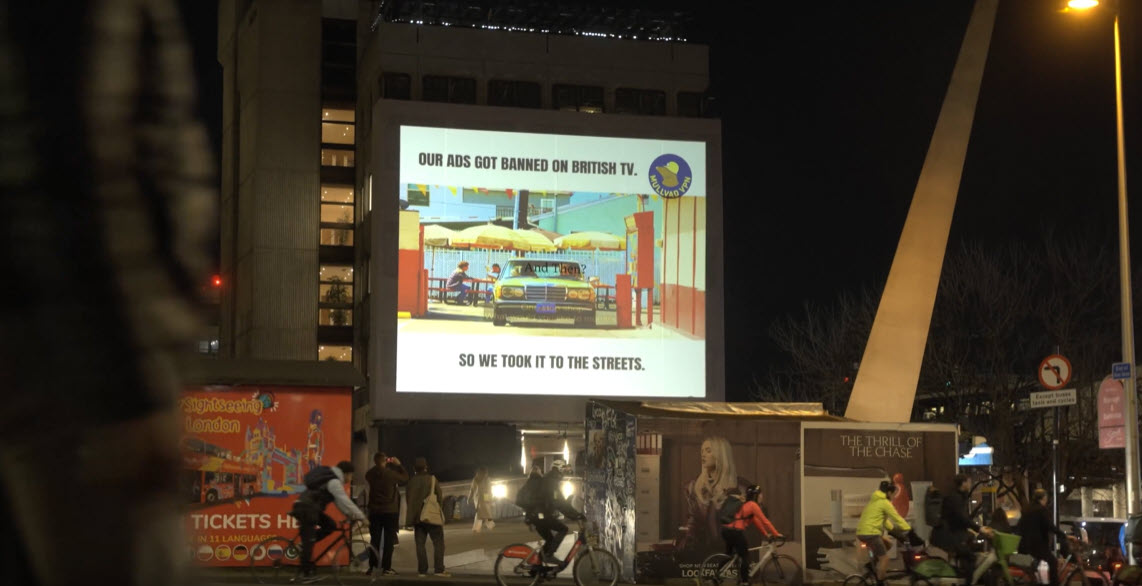
And then?
Who gets watched next?
Journalists? (I’m not worried. I’m not a journalist. I am a Billboard Correspondent)
Political critics?
Kids wearing headsets?
People with “controversial opinions”?
Apparently, asking that question was unacceptable.
Welcome to the Ministry of Clarity
The ad had to pass through Clearcast, the body that approves all television advertising in the UK.
Their reasoning reads like something written by a bureaucrat in a dystopian novel:
- “The concept lacks clarity.”
- “Examples may cause serious offence.”
- “It is unclear why these groups are included.”
Translation:
Please stop asking uncomfortable questions about government surveillance.
George Orwell would recognize the logic immediately.
Ironically, Orwell was British.
When Democracies Start Acting Like Authoritarians
History has a pattern.
Authoritarian regimes rarely begin by banning dissent outright.
They start by regulating it.
First it’s about “clarity.”
Then it’s about “safety.”
Then it’s about “misinformation.”
Then suddenly the government decides what speech is acceptable.
Sound familiar?
This is the same playbook used by:
- Communist states
- Nazi Germany’s propaganda ministry
- Modern China’s censorship apparatus
Different language. Same mechanics.
You don’t ban speech because it’s wrong.
You ban it because it questions power.

Even the Billboards Were Too Dangerous
Mullvad then tried something clever.
If television wouldn’t show the ad, they would put QR codes on posters in the London Underground so people could watch it themselves.
Nope.
Transport for London rejected those too.
The reasoning?
You cannot encourage people to watch a banned advertisement.
Let that sink in.
Even pointing to banned speech is apparently unacceptable.
I don’t want to put my British OOH pals on the spot, but ‘hey old chaps…WTF?’
Tom, Andrew, Richard, Stephen, Nigel, British OOH leaders, what the hell is going on?
…because Somewhere, Soviet bureaucrats are slow-clapping.
I would like to think in the States the OAAA to our rescue standing in the breach defending. WOOH where are you?
The Advertising Industry Should Pay Attention
For anyone in out-of-home advertising, this story should set off alarms louder than a malfunctioning digital billboard.
If regulators can ban:
- an advertisement
- a poster referencing the advertisement
- a QR code linking to the advertisement
then the implications for media freedom and advertising creativity are obvious.
Today it’s a VPN.
Tomorrow it could be any advertiser criticizing government policy.
And if the UK can do it, other governments will happily copy the model.

The Ultimate Bloody Irony
The final version of the campaign that regulators allowed was simply two words:
“And Then?”
A black billboard.
White text.
That’s it.
Apparently even British censors realized banning a question mark might look a little suspicious.
…authoritarianism hiding in a well-tailored British suit?
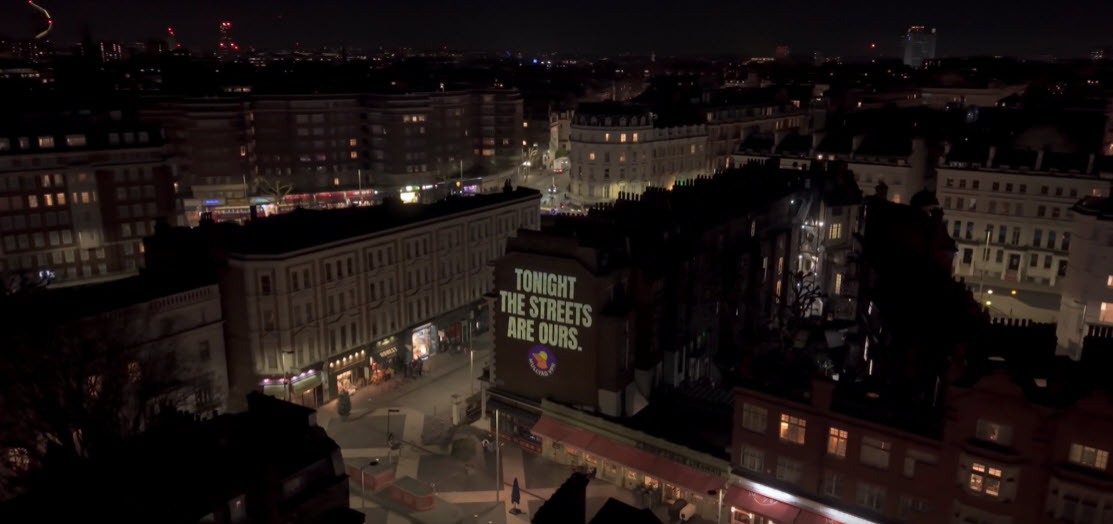
So… Has England Fallen?
Not yet.
But when a Country famous for Magna Carta, free debate, and parliamentary democracy starts banning ads that question surveillance…
…it’s fair to ask the question.
Is this still liberal democracy?
Or authoritarianism hiding in a well-tailored British suit?
Because history shows something important.
Freedom of speech rarely disappears all at once.
It erodes one “reasonable restriction” at a time.
And then?
Well…
That’s exactly the question Mullvad was asking.



- Advertisement -


Brent, thanks so much for highlighting this story. It seems unbelievable to me, dystopian. Like it could have never happened!
The irony is that we (USA) is being knocked for being “authoritarian”. Laughable.
Thank you, Mr. Mayor. And I say that with all due respect! We need more in the public office like you, @JosephMancino
This is EXACTLY what is happening in the UK. This article is accurate and articulate. It seems significant to me that it is called out in the context of OOH which is always on full view, always with nothing hidden, always in public for all to see freely.