



Beyond the Seven Word Rule: Why Mobile Billboard Advertising is the Long Form of the Streets
For decades, the out-of-home industry has relied on a core principle known as the seven-word rule. This logic was designed for the highway, where drivers moving at high speeds have mere seconds to process a message. In that high-velocity environment, brevity is essential. However, as the media landscape evolves, we are finding that the rules of the interstate do not always apply to the street level.
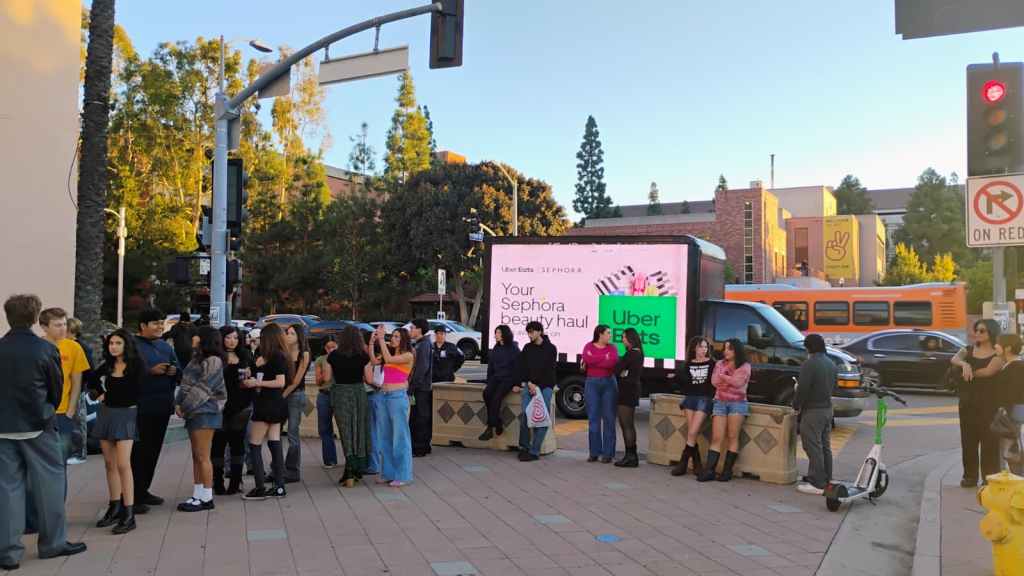
At Can’t Miss US, we see a growing opportunity for what we call the long form of the streets. While traditional static billboards excel at broad reach and high-speed brand recognition, mobile LED units offer a different type of value based on proximity and dwell time.
as the media landscape evolves, we are finding that the rules of the interstate do not always apply to the street level.
The Science of the Stare
The engagement model changes when an advertisement moves from a highway bypass to a city center sidewalk. In dense urban environments, traffic creates a captive audience. When an LED truck is positioned at a busy intersection or near an event entrance, the audience dwell time is measured in minutes rather than seconds.
This is the science of the stare. At eye level, your audience is not just glancing; they are observing. Whether they are pedestrians waiting at a crosswalk or drivers in slow-moving traffic, they are looking for a distraction. In these moments, the audience has the capacity to digest more than just a headline.
the science of the stare
A New Creative Playbook
By leveraging the unique characteristics of mobile billboards, brands can expand their creative strategy to include elements that might be impossible on a standard highway board.
The QR Code Bridge. While a QR code is rarely effective on a fast-moving highway, it becomes a powerful tool on a mobile billboard in a pedestrian zone. When people have the time to look, they have the time to scan. This creates a direct bridge from a physical ad to a digital conversion.
Narrative and Motion: The human eye is naturally drawn to movement. Mobile billboards allow for short micro-stories or motion graphics that build as the viewer watches. A countdown clock or a looping social feed can provide a level of engagement that complements the consistent presence of static media.
The Value of Detail In a high-dwell environment, you can afford to be detailed. You can include promo codes or descriptive copy that rewards the viewer for their attention. This allows a brand to move beyond basic awareness and start a more complex conversation with their target demographic.
From Impressions to Intent
The industry often measures success by impressions, which is an essential metric for brand health. However, street-level mobile billboard advertising allows us to also focus on intent. When you engage a consumer at eye level with detailed creative, you are helping move them from simple brand recall to active interest.
Conclusion
Static billboards remain a cornerstone of brand building for their scale and permanence. But for brands looking to add a layer of intimacy and detail to their campaign, mobile billboard advertising provides a unique canvas. By moving past the constraints of the seven-word rule when the environment allows it, we can turn every traffic light and pedestrian corner into a meaningful brand experience.
moving past the constraints of the seven-word rule …turn every traffic light and pedestrian corner into a meaningful brand experience
 About the Author:
Mizba Lakdawala-Sajan is a key leader at Can’t Miss US, home to the nation’s largest fleet of digital mobile billboard trucks. With a massive network operating in every major market across the country, the company is dedicated to transforming traditional advertising into a high-tech, street-level experience.


- Advertisement -

